
Toning, Patina, and Environmental Effects: When Color Adds Value — and When It Destroys It
Color on a coin can help or hurt its value. Some tones create depth, highlight relief, and strengthen eye appeal. Others signal storage problems, corrosion, or unstable reactions that continue after the coin enters a collection.
To understand the basics like coin composition, year, and other minting features, you can rely on coin identification tools, but apps do not cover other nuances. Surface chemistry reveals what truly matters. Color carries meaning, and not every shade deserves a premium.
Here, you can explore how tones form, which colors add value, which tones reduce it, and how to separate natural aging from environmental damage.
Why Color Develops on Coins
Coins react to air, moisture, chemicals, and light. Each metal ages differently. Copper darkens first, then shifts toward deeper brown or red-brown. Silver moves toward gold, blue, or violet. Nickel stays stable longer (but it can form a soft grey “haze,” which is natural and not a storage defect). Gold reacts the least, and on historic gold alloys (around 90% purity), it can develop a uniform warm red-brown tone, which is normal and not a sign of damage.
Collectors value natural transitions because they show honest storage. Artificial color, heat treatment, and chemical dipping often mimic attractive tones, but the surface reveals irregularities. Knowing the source of color helps read the surface correctly.
Below is a simple overview.
| Metal | Typical Natural Change | Risks |
| Copper | red → brown → chocolate | active corrosion, spots |
| Silver | light gold → blue/violet → deep grey | sulfide layers, humidity streaks |
| Nickel | slow, faint shifts | patchy haze |
| Gold | minimal color | impurity staining |
Natural toning develops slowly and evenly. Artificial toning appears fast, sharp, and inconsistent. The difference affects value more than age or rarity.
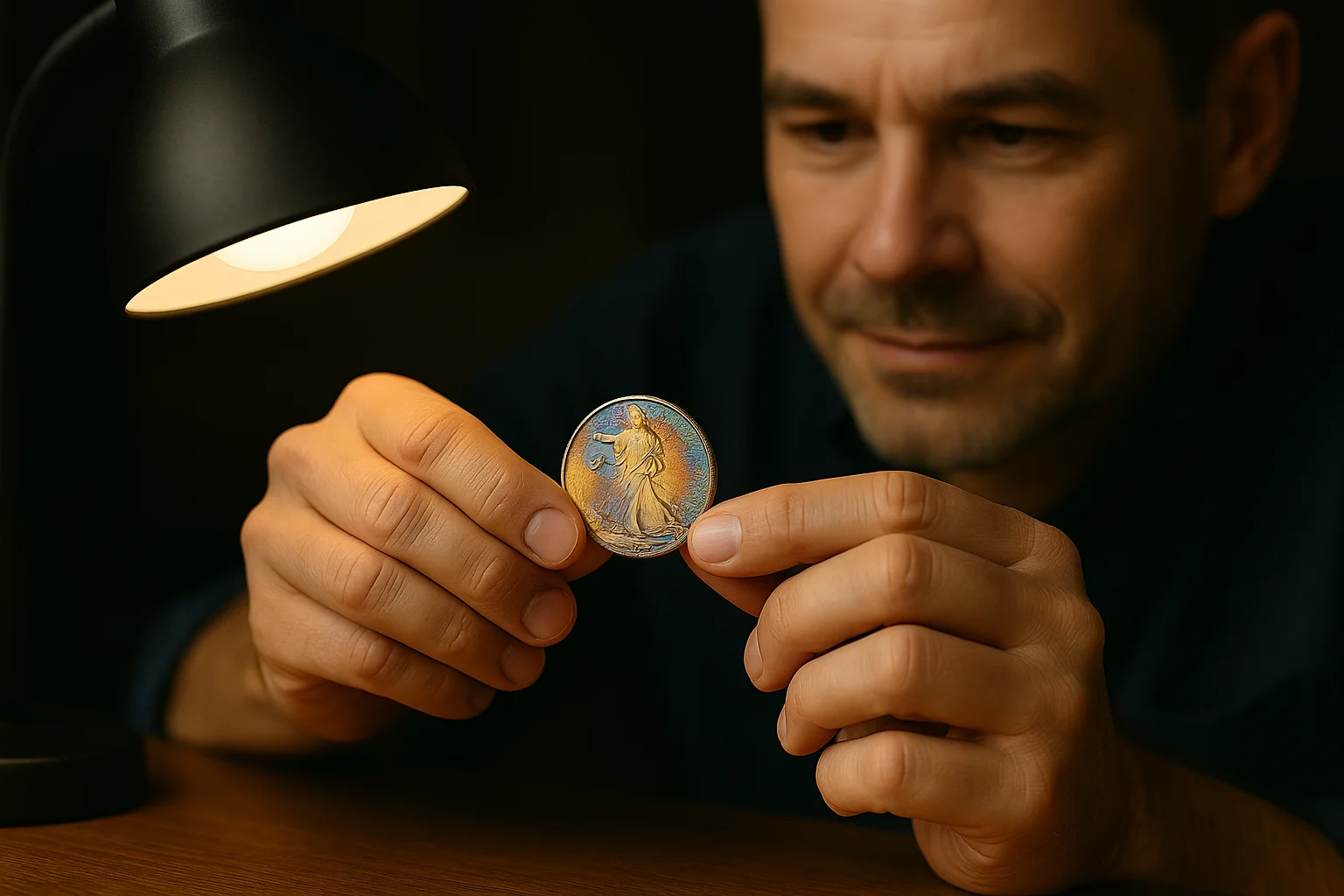
Types of Toning: Attractive vs. Problematic
Coins can develop many color patterns, and the market reacts to them very differently. Some tones form slowly and stay stable for decades. Others appear because of poor storage and signal long-term risk. Understanding this distinction helps avoid pieces that look interesting at first glance but carry hidden damage.
Market-accepted tones usually form in controlled environments and follow the surface naturally:
- Soft violet or blue on silver;
- Golden edges on older commemoratives;
- Uniform brown on copper without active spots;
- Light album rings near the rim;
- Thin patina that highlights relief.
These patterns come from steady exposure to air in albums, cloth bags, or paper envelopes. They do not disturb the metal. The color aligns with the original texture, and the luster remains visible under angled light. Collectors treat this type of toning as a positive sign because it shows that the coin aged in a stable environment.
Problematic tones tell a different story:
- Heavy black areas on silver;
- Neon or unnatural shades;
- Streaks from trapped moisture;
- Green PVC rings;
- Uneven patches on copper.
These tones develop when storage materials break down or when humidity accelerates reactions. The color often sits on top of the surface rather than within it. Coins with such patterns become unpredictable. Even if the tone looks dramatic, it usually points to instability. Prices drop because future change is likely.
Natural Toning vs. Artificial Toning
Determining whether color developed naturally is one of the hardest parts of evaluating a toned coin. Natural toning builds slowly and reacts to the environment in a steady way. Artificial color forms too fast, bypasses normal patterns, and often hides problems.
Signs of natural development:
- Smooth gradients;
- Gradual darkening from rim to center;
- Consistent direction of color;
- Intact luster under the tone.
These traits show that the metal reacted with air over years, not minutes. Natural tone follows the structure of the fields and devices, not the shape of a cloth or chemical wipe.
Signs of artificial treatment:
- Sudden color shifts;
- “Hot” or oversaturated hues;
- Spots trapped inside the tone layer;
- Broken or static luster.
Artificial toning often appears attractive online but reveals faults under controlled light. The surface may look coated, and the fields lose the natural movement of luster.
A coin scanner app can save your photos, but the final judgment depends on the collector. Digital tools help with structure, not with chemistry. Natural toning requires experience, side lighting, and a steady evaluation.
How Storage Shapes Color
Storage influences toning more than metal type or age. The container, humidity, and contact materials decide whether a coin develops stable patina or begins to break down. When the storage environment is consistent, toning forms slowly and stays predictable. When conditions shift or materials decay, color becomes uneven, and the surface loses stability.
Please refer to the table below to check storage options and their impact on coins:
| Storage Type | Typical Color Effect | Risk Level | Notes |
| Paper envelopes | Soft grey or golden tone; mostly even | Low | Safe when acid-free; restricts airflow for gradual aging |
| Albums & folders | Blue/gold/grey rings; rim-focused patterns | Low–medium | Tone follows openings; popular in several U.S. series |
| Cloth mint bags | Deep antique color; uniform coverage | Low | Sulfur in fabric creates a stable, attractive patina |
| PVC flips | Green residue; smeared patches | High | Plasticizer leaks over time; reaction accelerates |
| High humidity | Dark streaks; active corrosion | Very high | The tone does not stabilize; surface breakdown continues |
Paper envelopes slow oxidation by limiting airflow. This produces a mild, uniform tone that collectors often treat as a positive sign of careful storage.
Albums create color that follows the window shape. The rim absorbs more air exposure, forming predictable rings of blue, gold, or grey. These patterns are well-known and collectible because they form naturally over decades.
Cloth mint bags allow silver to react with sulfur from the fabric. This produces a deeper antique color, often uniform and stable. Many early-series coins gained their desirable patina in these bags.
PVC flips behave differently. Over time, the plastic releases residue that settles on the coin as a sticky green film. The reaction rarely stays in one place. Once it begins, damage usually spreads unless the coin is removed immediately.
High humidity triggers the fastest deterioration. Moisture forces oxygen and contaminants into the metal, creating dark streaks and corrosion. This type of toning does not stabilize and always reduces long-term value.
Storage history helps predict future behavior. Stable mediums create a stable tone. Unstable mediums create continuous change, and coins stored this way require caution even when the color appears mild.
Toning on Silver Coins: When It Adds Value
Silver reacts quickly with air. Controlled conditions create attractive layers that highlight the design.
Premium-worthy tones on silver:
- Album rainbow bands along the rim;
- Soft gold spreading toward the center;
- Blue-violet tone that keeps full luster beneath.
These patterns remain stable because silver sulfide layers protect the core metal. Buyers pay premiums for depth, balance, and originality.
Tones that reduce value:
- Thick, uneven, or opaque black crust that hides detail;
- Harsh grey patches from chemical dips;
- Wet-looking streaks from interrupted reactions.
Silver reacts aggressively to humidity. Even small moisture exposure can create inconsistent surfaces. A silver coin with uneven black tone loses stability and demands a discount.
Small comparison table
| Tone Type | Market View | Stability |
| Golden edge | Positive | High |
| Album rainbow | Strong Premium | High |
| Heavy black | Negative | Low |
| Chemical brightening | Negative | Unstable |
Toning on Copper Coins: Beauty, Risk, and Reality
Copper carries the highest risk. It changes its chemistry faster than silver or nickel. A copper coin can show a beautiful chocolate tone or destructive orange corrosion.
Desirable copper tones:
- Smooth chocolate brown;
- Red-brown surfaces with even distribution;
- Stable, dark patina from old storage.
Collectors reward stability. Copper with honest darkening often holds value because it shows no active reaction.
Dangerous copper patterns:
- Bright orange spots that expand;
- Green patches from PVC;
- Glossy surfaces that indicate chemical cleaning.
Copper cannot hide problems. Once corrosion begins, it rarely stops. Removal efforts change the surface permanently.
- The red–brown–brown transition
Collectors track the amount of red remaining on a copper coin. Red holds premium, red-brown holds moderate value, and brown stabilizes long-term. Artificial improvements of red surfaces are common, so buyers watch for natural pathways rather than sudden color shifts.
How Grading Services Treat Toned Coins
Toning influences grading but does not replace structural quality. Graders check surface integrity first and color second.
Positive effects on grading:
- Original tone protects surfaces;
- Deeper tone hides minor marks;
- Stable color indicates honest storage.
Negative effects on grading:
- Artificial tones receive details grades;
- Environmental damage overrides everything;
- Splotchy tone can signal hidden problems.
Toning never compensates for major marks or weak strike. It supports value only when the fundamental surfaces are strong.
When Color Helps — and When It Hurts
Color affects value only when it supports the surface. Stable tone adds confidence; unstable tone signals risk. Below you can see the details.
When Color Adds Value
Toning helps when it forms slowly and stays stable. Collectors pay attention to colors that match known storage patterns and preserve the surface.
Album toning on mid-century silver
Classic albums create soft rings of blue, gold, or grey. The pattern forms over decades and stays predictable, which reassures buyers.
Uniform brown on 19th-century copper
Old copper often settles into smooth, chocolate brown. This color hides light marks and signals long, steady storage rather than recent cleaning.
Golden fields on modern commemoratives
A mild gold wash reflects proper handling and natural oxidation. Many collectors prefer this tone over bright white surfaces that indicate dipping.
Stable tone earns trust because it forms without interference and reflects controlled conditions.
Tip: Use Coin ID Scanner to save consistent photos and compare tone behavior over time. Our free coin identifier app also offers you a built-in AI assistant that you can ask about everything, be it the tone of your coins or better ways to store your collection.
When Color Destroys Value
Color reduces value when it masks damage or shows unstable chemistry. These cases signal risk rather than originality.
Chemical blue on cleaned silver
Artificial heat or chemicals create strong color but destroy texture. The surface stops behaving naturally, and liquidity drops immediately.
Green deposits on copper
Even small green spots indicate active corrosion. The reaction spreads and rarely stabilizes, making the coin unsafe for long-term storage.
Thick black tone with no remaining luster
When silver turns fully black and loses luster, the metal has changed. Color becomes a cover, not a feature, and the surface cannot recover.
Unstable tone always competes with the structure of the coin. Once the surface breaks down, color cannot compensate for the loss.
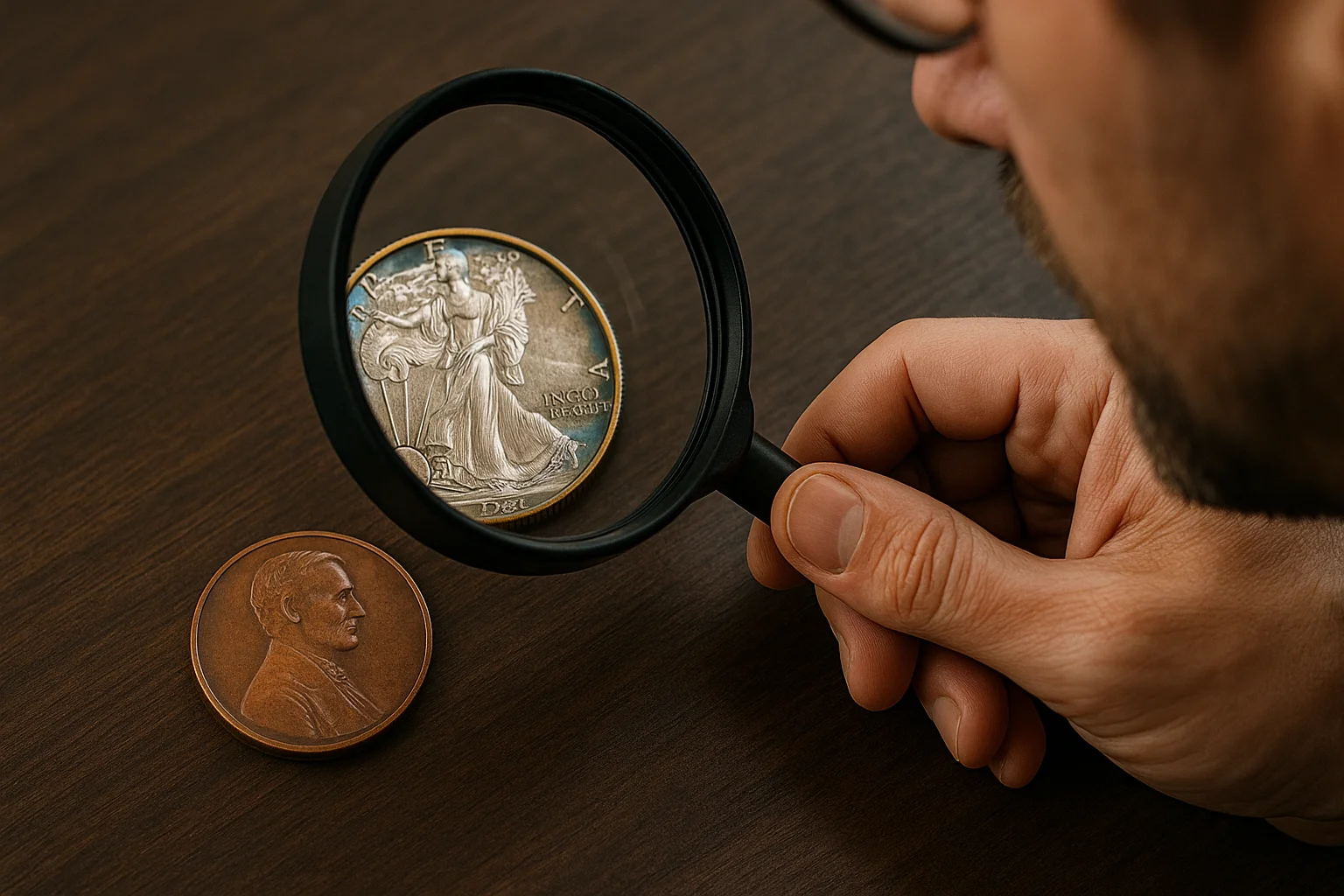
Understanding Color as a Market Signal
Color tells a story, but not every story ends well. Toning can strengthen a coin or reveal weakness. The key is balance: original surfaces, stable storage, and predictable patterns. Collectors gain confidence once they know which shades reflect honest aging and which tones warn of deeper issues.